Try it out
Try it out
Opens in a new tab. No account needed
Planner opens in a new tab.
No account needed
Idea
The app helps you travel around Sweden and stay on budget.
You see a plan with every move from the moment you arrive in the country — with overhyped places filtered out.
Context
Reshaping for mobile browsers
While laptops are great for planning, the phone is still the obvious king once you’re on the trip.
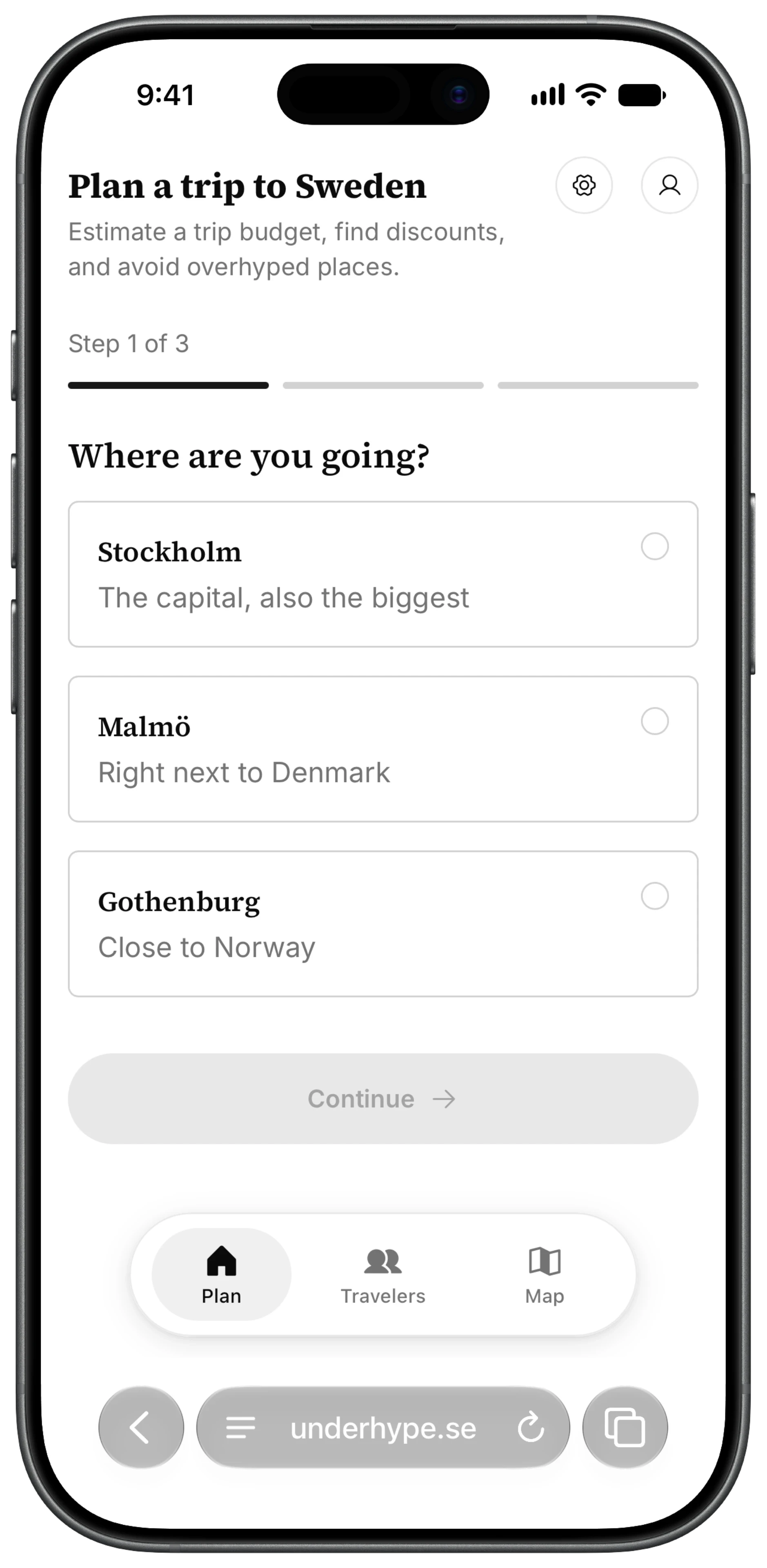
Homepage for logged-out users
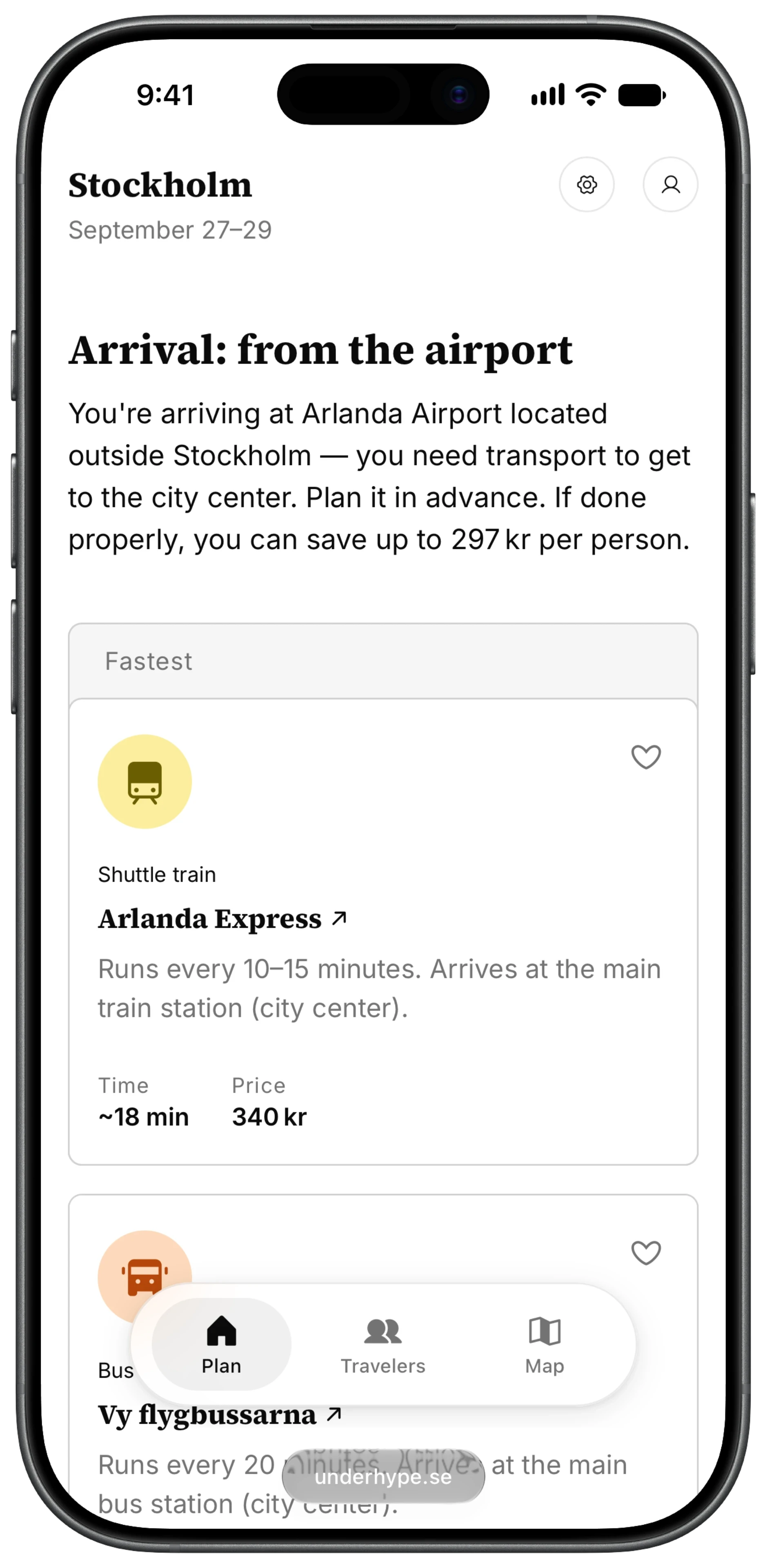
Airport transfer options
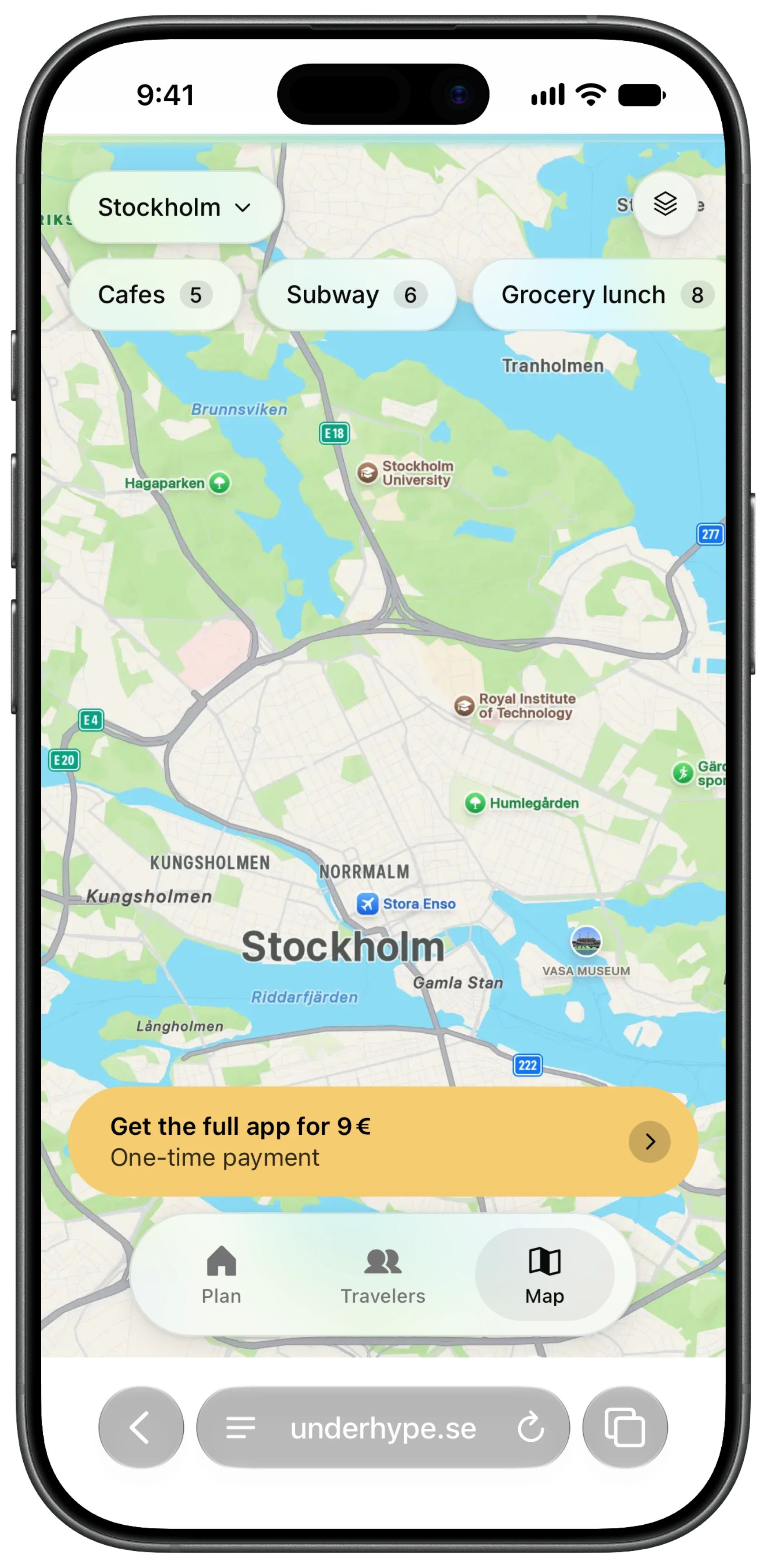
Map tab for logged-out users
Target audience
Who this app is for
Underhype is made for Americans, Brits, and Germans — the biggest groups of international travelers in Sweden. They stay in Sweden for 2–7 days and plan a trip several months ahead.
Note in journal
Industry stats about travelers in Sweden →
Context
Story at the center of the design
The idea of Underhype — cut the noise and avoid the mainstream. This idea rules everything in the product.
Context
How research shaped the planner
The first version of Underhype was designed at the beginning of 2026 — in parallel with research. Back then it was mostly me testing what AI could do. Once the research and interviews were done, I redesigned the planner from scratch. This time with the financial plan, the user groups, and the marketing channels in mind.
Draft version
The homepage was half marketing, half product. You had to go through three steps before you saw any trip plan.
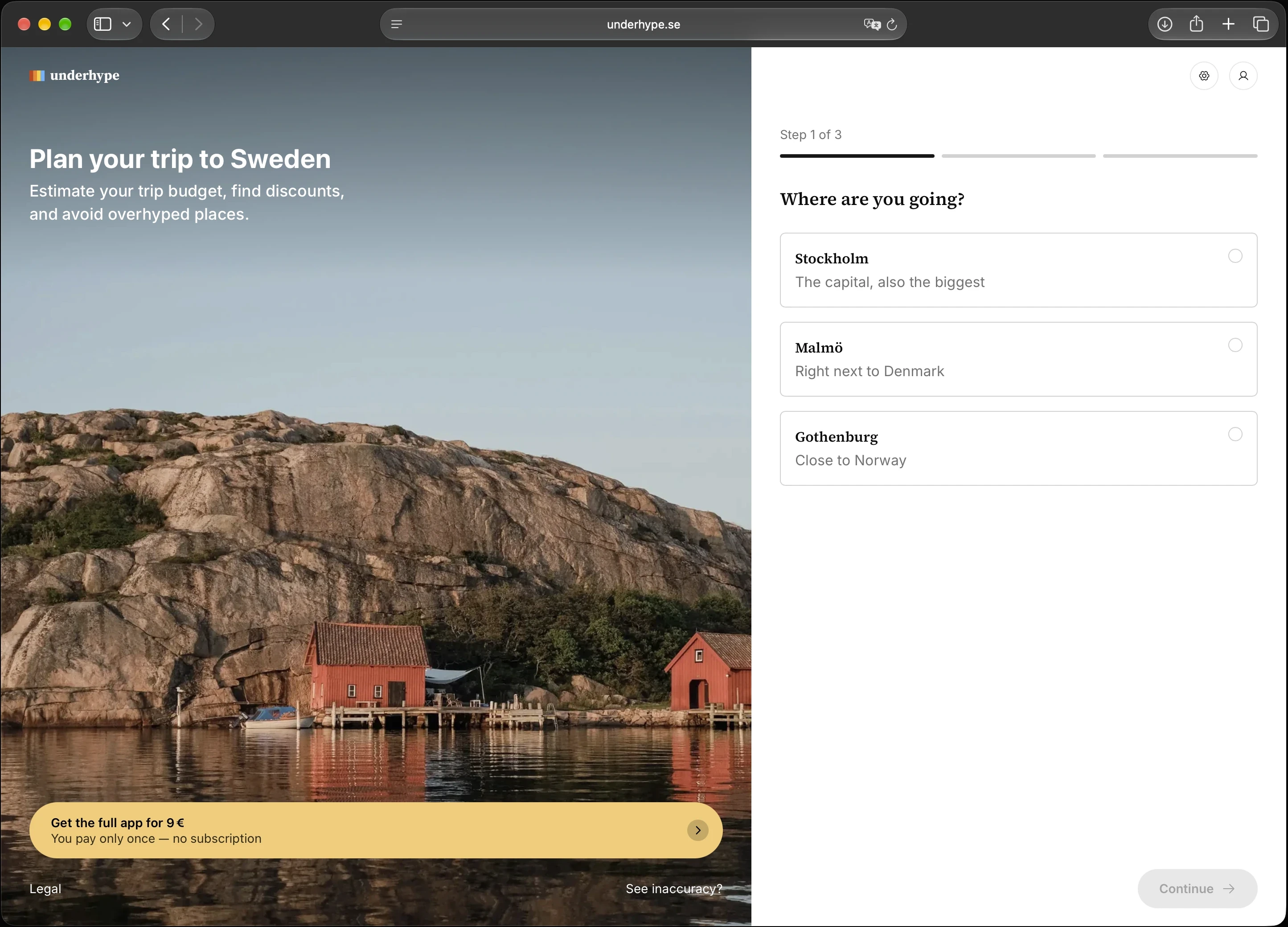
Dynamic sidebar. On search results, it shrinks and gives more control options
Problems
In the interviews, I asked people to try the interface, and you could see them getting bored. Which city? When? How do you arrive, how do you leave? Clicking through all of that felt like a chore, and they still hadn’t seen a single tip. Besides, the new marketing strategy was to get users just by giving away all the city tips for free — in a way nobody, AI included, can. That was supposed to bring in leads for the paid features — interactive maps, the budgeting tool, offline mode. So the goal was to show the actual results right away, on the homepage, get attention, and then sell extra features to users. The whole marketing part will be done even before people land on the site — on YouTube, Threads, and Instagram.
Release version
The new version shows search results for Stockholm right away — with simple options to change the city, dates, and means of travel.
Dynamic sidebar. On search results, it shrinks and gives more control options
Context
Production cycle with AI
01 Claude Design
02 Paper
03 Claude Code
04 Localhost
05 Pre-production
06 Production
Production cycle
with AI
01
Claude Design
03
Claude Code
04
Localhost
05
Pre-production
06
Production
02
Paper
Since I was the only human on the project, it was all about art direction, handovers, and documentation for agents.
Claude Design
Generated ideas and kept everything at the design system level, using only color tokens, components, etc.
Paper + Claude Code
I refined things in Paper, handed them back to Claude Design, then to Claude Code to build on localhost.
Pre-production environment
Features behind the paywall got tested in pre-production. I also used it for usability tests.
Context
Documenting the logic
To “vibe-code” something that actually works, you have to give the AI clear instructions. I used what I learned back at Yandex — an enterprise-level tech company — and documented every step from both the user’s and the system’s perspectives. At the end of the day, it was a lot like a PM job: sending detailed specs to an engineering team.
Context
Shipping on time
I follow the Basecamp principle: Fix Time and Budget, Flex Scope. So instead of launching everything at once, I release features one by one to hit deadlines.
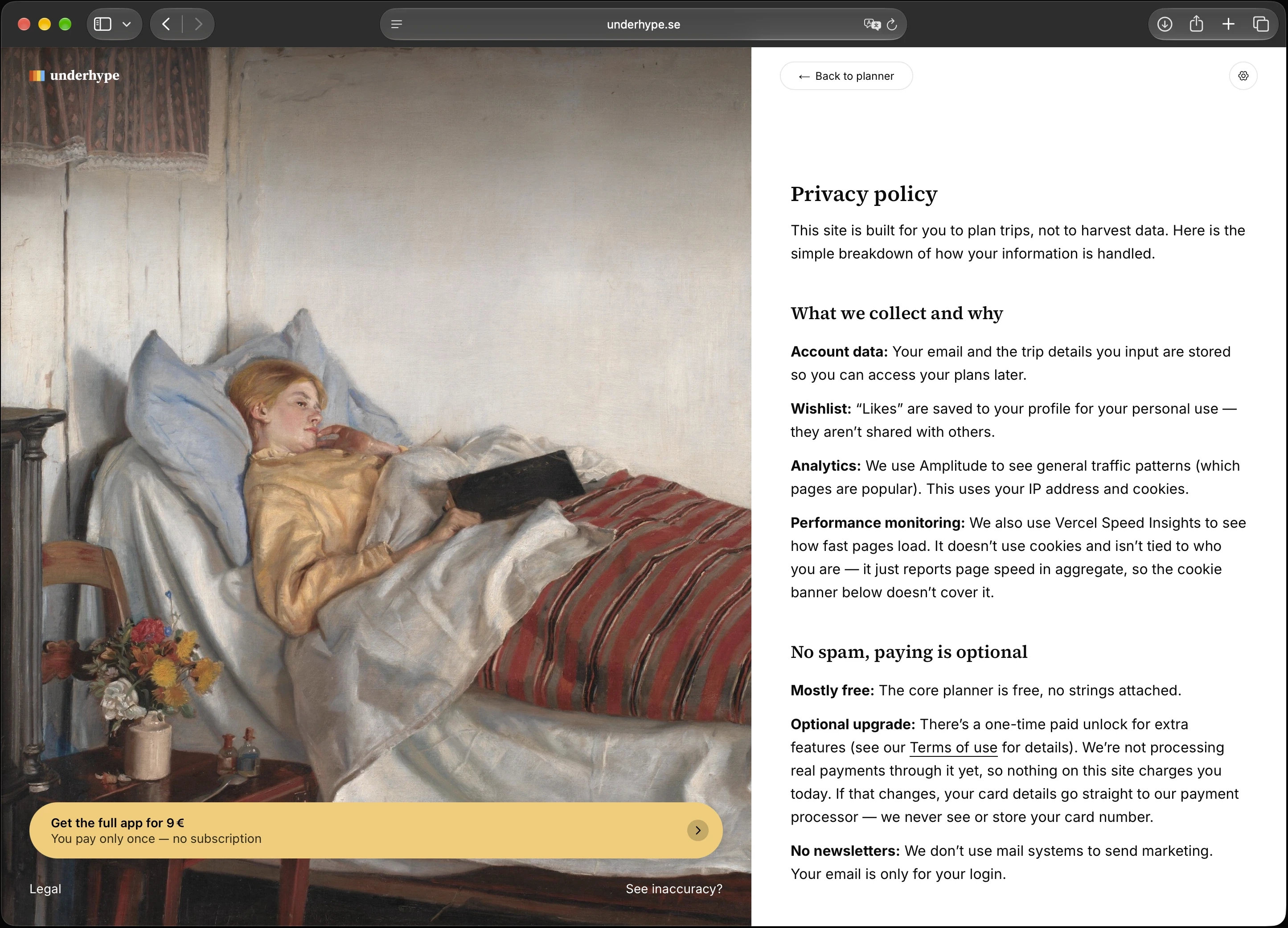
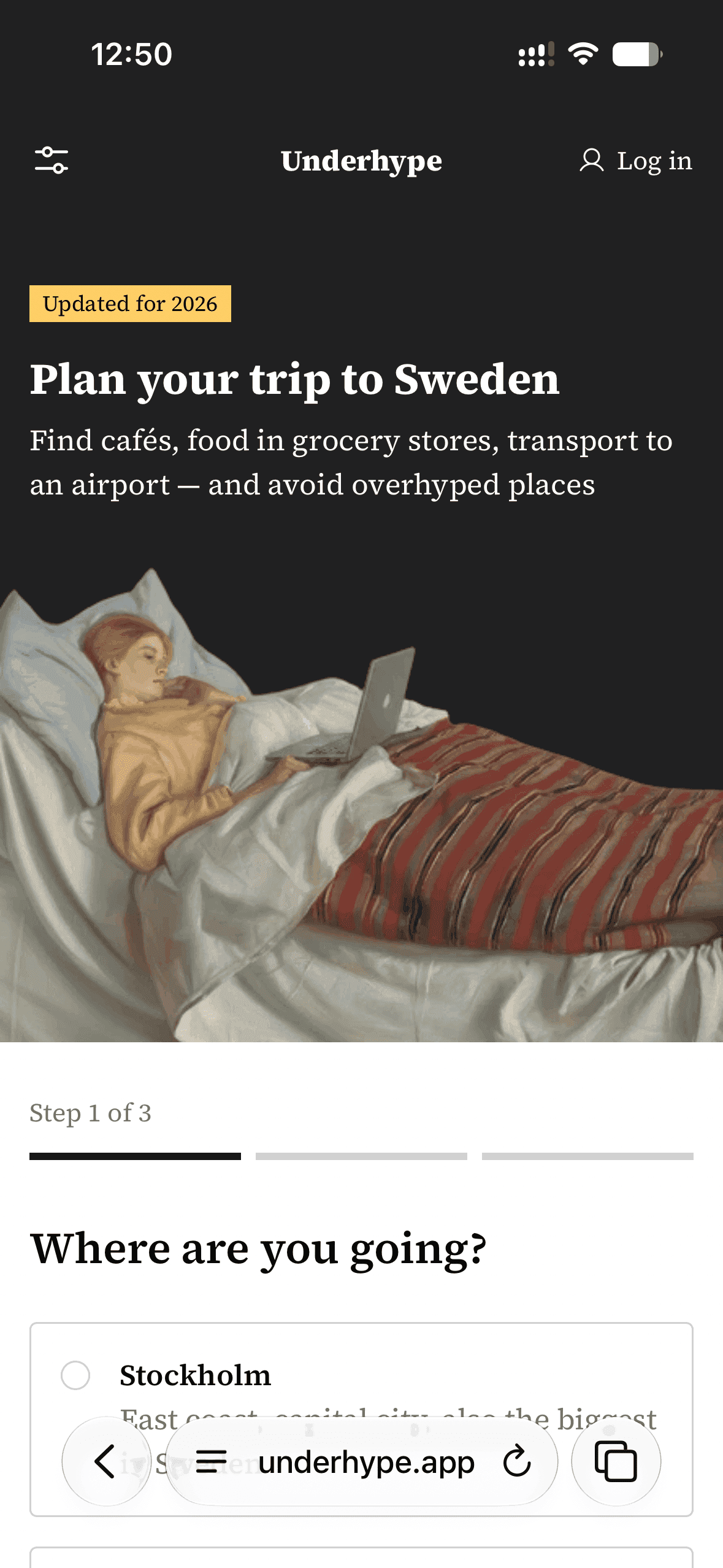
In the pre-MVP version of the app, I didn’t have visuals yet, so the app used Danish paintings.
Made to pay for itself
Underhype is not a pet project. It’s designed to be profitable. The app can generate around 612 € in profit per month. Here is a simplified financial plan for a pessimistic scenario.
Note in journal
All numbers and reasoning behind the financial plan →
Monthly budget
Claude
22 €
Vercel
20 €
Domain
1 €
Supabase
25 €
Paid marketing
0 €
Listed costs / month
68 €
Monthly sales example
New purchases (example)
100
Sales at 9.99 €
999.00 €
VAT reserve (assumed)
199.80 €
Store fee (assumed)
119.88 €
After VAT + store fee
679.32 €
After listed costs
611.32 €
Cover listed costs
Full access price
9.99 €
Purchases / month
11
After VAT + fee / sale
~ 6.79 €
What’s next
Since I’m solo, I have a plan for a year to make sure I stay on track and keep shipping.
Q1
Q2
Q3
Q4
Today
Underhype’s homepage